
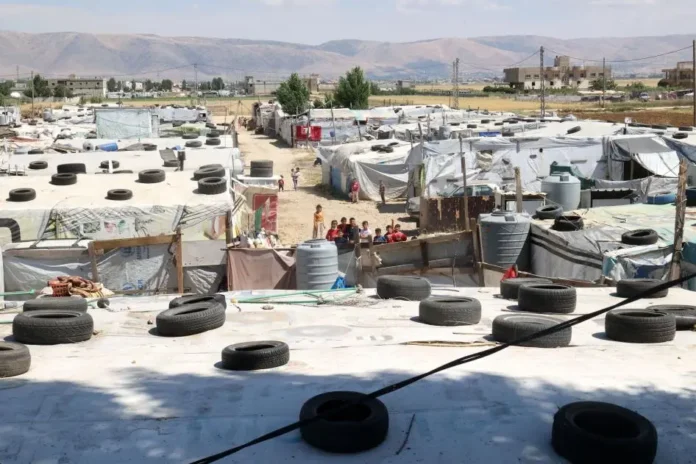
Lebanon has witnessed the departure of thousands of Syrians over the past four months due to the harsh living conditions and increasing campaigns of repression and forced deportation against them, which have included activists and defectors from the Syrian regime.
The International Organization for Migration confirmed on April 30, 2024, that 3,000 Syrians had left Lebanon since January 2024, compared to 4,500 Syrians who left during 2023, despite legal measures taken by Cyprus to prevent the influx of refugees, according to the Associated Press.
Amy Pope, the Director General of the International Organization for Migration, stated that a significant number of Syrians have been recorded arriving on the Mediterranean island of Cyprus, coming from Lebanon, due to the reduction of aid provided to Syrians and the dire conditions they are experiencing in Lebanon.
Amy expressed her concern about the suffering of Syrians and their lack of “safety” in Lebanon, explaining that “when they cannot stay safely, they will do what any human being would do, look to where they can go,” as she described.
On September 7, 2023, Amnesty International called on the authorities in Cyprus to protect refugees and migrants from racist attacks and to take immediate measures to address them.
Human Rights Watch documented on April 24, 2024, the arbitrary detention of Syrians by Lebanese authorities and their “forced” return to Syria after being tortured. Among them were opponents of the Syrian regime and defectors from its army.
The organization “Same Justice” confirmed that these measures could put the lives of those deported from Lebanon, especially defectors and activists, at great risk, especially with the Syrian regime’s continued policy of enforced disappearance, not allowing victims to undergo investigation under independent judicial or human rights supervision, and withholding essential information about the victims from their families, including all related to their places of disappearance.
The Human Rights Watch report considered that Syrian refugees “struggle to remain in Lebanon despite deportation orders and the increasingly hostile environment, exacerbated by officials scapegoating refugees.”
A United Nations report dated March 8, 2024, indicated that the United Nations High Commissioner for Refugees (UNHCR) is aware of the deportation of 13,772 individuals from Lebanon or their dispatch to the Syrian border in approximately 300 incidents during 2023, including 600 in a single day on November 8, 2023.
The report mentioned that on October 27, 2023, local Lebanese authorities in 27 municipalities implemented measures restricting displaced Syrian refugees in southern Lebanon from finding alternative shelter. This action was in reference to the displacement of tens of thousands from southern Lebanon following cross-border fighting between Israel and Lebanese and Palestinian armed factions, ongoing since October 2023.
Syrians in Lebanon have increasingly faced campaigns of eviction from their homes, closure of their shops, and physical assaults. Furthermore, provinces and municipalities have imposed discriminatory curfews, unlawfully restricting Syrians’ freedom of movement. In response, 19 Lebanese organizations called for the cessation of the deportation of Syrian refugees on May 11, 2023.
The final statement of the outcomes from the national meeting called by the Lebanese Forces Party on April 27, 2024, included the Syrian issue, emphasizing the need to enhance border control with Syria, regulate border crossings, and devise an urgent and decisive plan to repatriate Syrians residing illegally in Lebanon, especially since the number of such Syrians has reached 1.7 million.
The official Lebanese rhetoric calling for the return of Syrians to their homeland has increased. Samir Geagea, leader of the Lebanese Forces Party, called for correcting what he described as the “abnormal situation” in Lebanon by returning supporters of the regime to areas under its control and sending opponents to northern Syria, according to his statement to the Associated Press on May 1, 2024.
Mustafa Fouani, head of the Executive Council of the Amal Movement, called on April 9, 2024, for his country to formulate what he called a “unified national vision” to address the issue of Syrian refugees and ensure their prompt return to their homeland, Syria.
The Same Justice organization demands the implementation of the 1951 Refugee Convention and its 1967 Protocol, especially since 149 countries are parties to either the convention, the protocol, or both.
The 1951 Convention and its Protocol define the term refugee, their protection, and rights, in addition to the legal obligations of states to provide them with protection.
The fundamental principle of the convention is non-refoulement, which asserts that a refugee should not be returned to a country where they could face serious threats to their life or freedom. This principle is now considered a rule of customary international law.

