
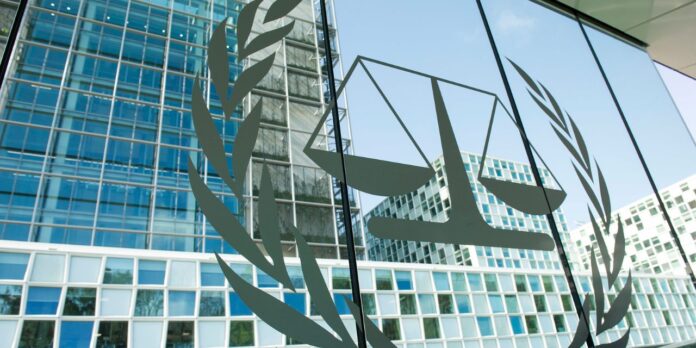
Image source: United Nations Photo
The Atlantic Council has emphasized the urgent necessity of referring the situation in Syria to the International Criminal Court (ICC).
In an article published on September 26, 2024, titled “Member States Should Refer the Situation in Syria to the International Criminal Court,” the Atlantic Council (a nonpartisan think tank focused on international affairs) highlighted the ICC’s critical role in addressing international crimes, wherever they occur.
The article referred to the significant impact of the ICC prosecutor’s recent request for arrest warrants against the Israeli Prime Minister, Defense Minister, and three Hamas leaders, accused of war crimes and crimes against humanity in Israel and Gaza. It called for similar action in Syria to end the prolonged conflict.
The article detailed the devastating toll on civilians, with significant numbers of deaths, injuries, and attacks involving chemical weapons. It described Syria as experiencing “the largest humanitarian and refugee crisis of the current era.”
The report referenced United Nations (UN) investigations that confirm the Syrian regime and affiliated military forces as the “primary perpetrators” of severe human rights violations and crimes under international law. It called for the investigation and prosecution of all those responsible for crimes against humanity and war crimes, stressing that accountability must extend to all sides, not just the regime.
The article also highlighted international efforts to hold the Syrian regime accountable, particularly the cases brought by the Netherlands and Canada before the International Court of Justice (ICJ) for violations of the Convention against Torture. Additionally, it mentioned the criminal prosecutions in Germany’s Koblenz trials and France’s Paris trials, where individuals were held accountable for crimes committed in Syria.
The Atlantic Council urged the ICC to initiate proceedings to prosecute those responsible for international crimes, including war crimes, crimes against humanity, and genocide in Syria.
A Decade of Conflict
More than a decade after the start of the conflict in Syria, the article stressed that local efforts remain insufficient to provide accountability and justice for the vast number of victims, detainees, and displaced persons. It argued that building a new Syria requires addressing the atrocities committed, emphasizing that accountability at the highest levels is both a moral obligation and a necessary step toward reconciliation and a better future.
The authors called for ICC member states to refer the situation in Syria to the court as soon as possible.
How the ICC Can Be Involved
The International Criminal Court (ICC) was established to prosecute those responsible for international crimes, such as war crimes, crimes against humanity, and genocide. The ICC’s jurisdiction is governed by the Rome Statute, which outlines three ways the court can initiate proceedings:
- State Referral: Member states can refer a situation to the ICC.
- Prosecutor’s Initiative: The prosecutor can initiate an investigation on their own.
- UN Security Council Referral: The UN Security Council can refer cases to the ICC, regardless of whether the state involved is a party to the Rome Statute.
In 2014, an attempt to refer Syria to the ICC, backed by 13 Security Council members, was vetoed by Russia and China. As Syria has not ratified the Rome Statute, the ICC Prosecutor cannot initiate an investigation on their own, nor can member states refer crimes committed solely on Syrian territory.
However, two landmark ICC rulings in 2018 and 2019 reopened a potential pathway for Syria to be referred to the court. The article argued that now, five years later, this path must be fully utilized.
Path to the ICC
In 2018, the ICC Pre-Trial Chamber ruled that the court had jurisdiction over the deportation of Rohingya refugees from Myanmar to Bangladesh, despite Myanmar not being a member of the ICC. This allowed the ICC to investigate cross-border crimes with a jurisdictional link to an ICC member state.
In 2019, the ICC Prosecutor requested an investigation into crimes against humanity committed in Myanmar, including deportation and persecution. The Pre-Trial Chamber granted the request, paving the way for a full investigation.
The article suggested that a similar approach could be applied to the Syrian situation, particularly concerning the mass displacement of civilians into Jordan, which is an ICC member state that has ratified the Rome Statute.
Victim Claims and the ICC
Over fifty Syrian victims, deported to Jordan, have filed legal claims, alleging the ICC’s jurisdiction to investigate their cases. Over the past five years, the ICC Prosecutor has received multiple communications from victims, their lawyers, and NGOs. Although no decision has been made yet, under Article 15 of the Rome Statute, the Prosecutor has discretion to open an investigation but is not bound by a specific timeline.
However, ICC member states have the power to compel action under Article 14 of the Rome Statute by formally referring the situation to the court and requesting an investigation.
Accountability for International Crimes
The article outlined four key reasons why a state referral of Syria’s situation is the most practical and effective approach to ensure accountability:
- Simplified Process: Article 14 does not require a detailed evidentiary submission, making referrals relatively straightforward.
- Obligation to Investigate: A state referral compels the Prosecutor to open an investigation unless there is no reasonable basis for proceeding.
- Procedural Efficiency: Unlike NGO submissions under Article 15, a state referral does not require Pre-Trial Chamber authorization, speeding up the process.
- Access to Existing Evidence: The United Nations General Assembly’s International, Impartial, and Independent Mechanism (IIIM) has already gathered extensive evidence on crimes committed in Syria, which the ICC Prosecutor could utilize.
The article concluded that cooperation between the ICC and the IIIM would optimize resources and send a strong message of justice to both perpetrators and victims.
About the Atlantic Council
The Atlantic Council is a Washington, D.C.-based think tank, founded in 1961, that focuses on international politics, security, and global affairs. It promotes transatlantic cooperation between the United States and Europe, particularly in the fields of international security, foreign policy, and economics.
Authors of the Article
- Yasser Tabbara: A founding board member of the Syrian Forum and a strategic planner.
- Nick Liddy: Head of Litigation at the Worldwide Legal Centre (LAW) and a former lawyer in the Office of the Prosecutor at the ICC.

